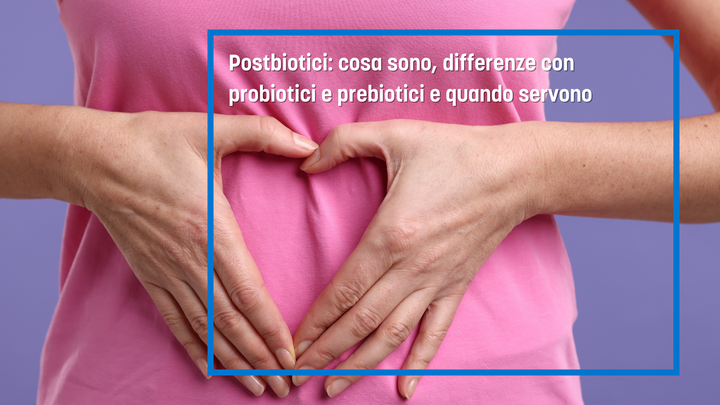
How many times have you felt bloated after meals, in the evening or on more stressful days?
And how many times have you told yourself:
“Tomorrow I’ll be more careful…”
“It’s just stress…”
“It always happens to me…”
Abdominal bloating is one of the most common complaints, especially among women. So common that it is often normalized.
But having bloating often or every day is NOT normal.
Why shouldn't bloating be normalized?
Because it's a signal from the body. A message that something in digestion, gut flora, or lifestyle is out of balance. Bloating is a multifactorial symptom that can have many different causes. Bloating is often the result of multiple factors adding up.
Here are the main ones:
-
slowed digestion: large meals, eating quickly, stress, and irregular rhythms can slow gastric emptying.
-
excessive intestinal fermentation: an unbalanced microbiota can lead to higher-than-normal gas production.
-
altered microbiota: stress, antibiotics, a low-fiber diet, excessive sugars, or irregular meals can reduce the diversity of the intestinal flora.
-
Food sensitivities or intolerances: lactose, gluten, yeast, or FODMAPs can be triggers for abdominal distension.
-
Stress or anxiety: the gut-brain axis is a scientific reality. When the mind is tense, the gut also "gets blocked."
-
Irritable bowel syndrome (IBS): affects a large part of the population, especially women. Bloating, irregularity, and pain are among the typical symptoms.
The signs to listen for:
To understand if your bloating is a symptom that needs to be investigated, ask yourself:
-
does it happen more than 2-3 times a week?
-
does it happen even with light meals?
-
is it present both after lunch and in the evening?
-
does it cause you discomfort and social embarrassment?
-
does it interfere with energy, concentration, or sleep?
If you answered "yes" to more than one question, your body is communicating something.
How to reduce abdominal bloating?
Some of the most effective strategies are:
-
eat more slowly, how you eat is as important as what you eat.
-
increase your fiber, these help the gut flora but must be introduced in a balanced way.
-
pay attention to Fodmap, some fermentable sugars can trigger bloating.
-
manage stress, breathing, light movement, regular sleep, small actions that make a big difference.
-
support the microbiota, here an often underestimated aspect comes into play: the gut flora.
The role of postbiotics in abdominal bloating
Postbiotics are bioactive compounds derived from the action of probiotics.
They have a great advantage: they offer benefits similar to probiotics, but without containing live bacteria.
They are very useful for:
-
rebalancing the gut flora,
-
reduce bloating and fermentation,
-
improve regularity,
-
strengthen the intestinal barrier,
-
modulate local inflammation.
They are well tolerated even by those with a sensitive intestine.
Plas Postbiotic: a gentle, effective and pleasant support to take
When bloating is frequent, the first step is to listen to your body.
Plas Postbiotico contains specific postbiotics that help to:
-
rebalance the intestinal flora,
-
reduce bloating and abdominal tension,
-
improve digestion,
-
support irritable bowel,
-
promote daily well-being and regularity.
The Gel Bio-Enhancer® technology, the patent present in the formulation of all Plas Pharma supplements designed to:
-
protect the active ingredients along the digestive tract,
-
promote a gradual and controlled release,
-
improve the bioavailability of postbiotics,
-
ensure greater effectiveness compared to traditional formulations.
Furthermore, Plas Postbiotico has a pleasant taste and is easy to take thanks to its gel stick pack format: practical, single-dose, to take anywhere.